The boundary of the self
There is a simple way to describe THE HUMAN RECORD: a person is more complex than any record made about them. A photograph is incomplete. A biography is incomplete. A database entry, an institutional category, or a machine-generated description captures only part of a person.
But I have gradually realised that this is not where the project begins.
The incompleteness of a record is a condition. What interests me is what happens after that condition becomes organised.
For me, the project begins with the boundary of the self.
I can look at another person, speak with them, photograph them, listen to their memories and read what they have written. But I cannot directly enter their experience. I cannot completely access what they remember, feel, fear, misunderstand, or choose not to say. There is always a boundary between one person and another.
From that boundary comes an asymmetry of information. I use the term here more broadly than its technical meaning in economics: not simply to describe two parties possessing different market information, but to name a more basic inequality of access between selves.[1] No matter how intimate the encounter, I never possess the other person’s experience in the same way that they do.
And from that asymmetry comes the need to interpret.
From signs to records
Human beings respond to this distance by creating things that can stand between one person and another: language, images, stories, names, measurements, archives and records.
I do not see these things as failures. Recording is necessary.
Without signs and records, knowledge would remain bound to immediate experience. Writing allows something to survive the moment in which it was produced. Photography allows an appearance to remain after an encounter has ended. Archives allow information to move beyond an individual memory.
A record gives knowledge duration.
It can be preserved, transmitted and retrieved.
And once it can be retrieved, it can also be organised.
This is where the problem changes.
A record no longer exists only as the trace of an encounter. It can become part of a system.
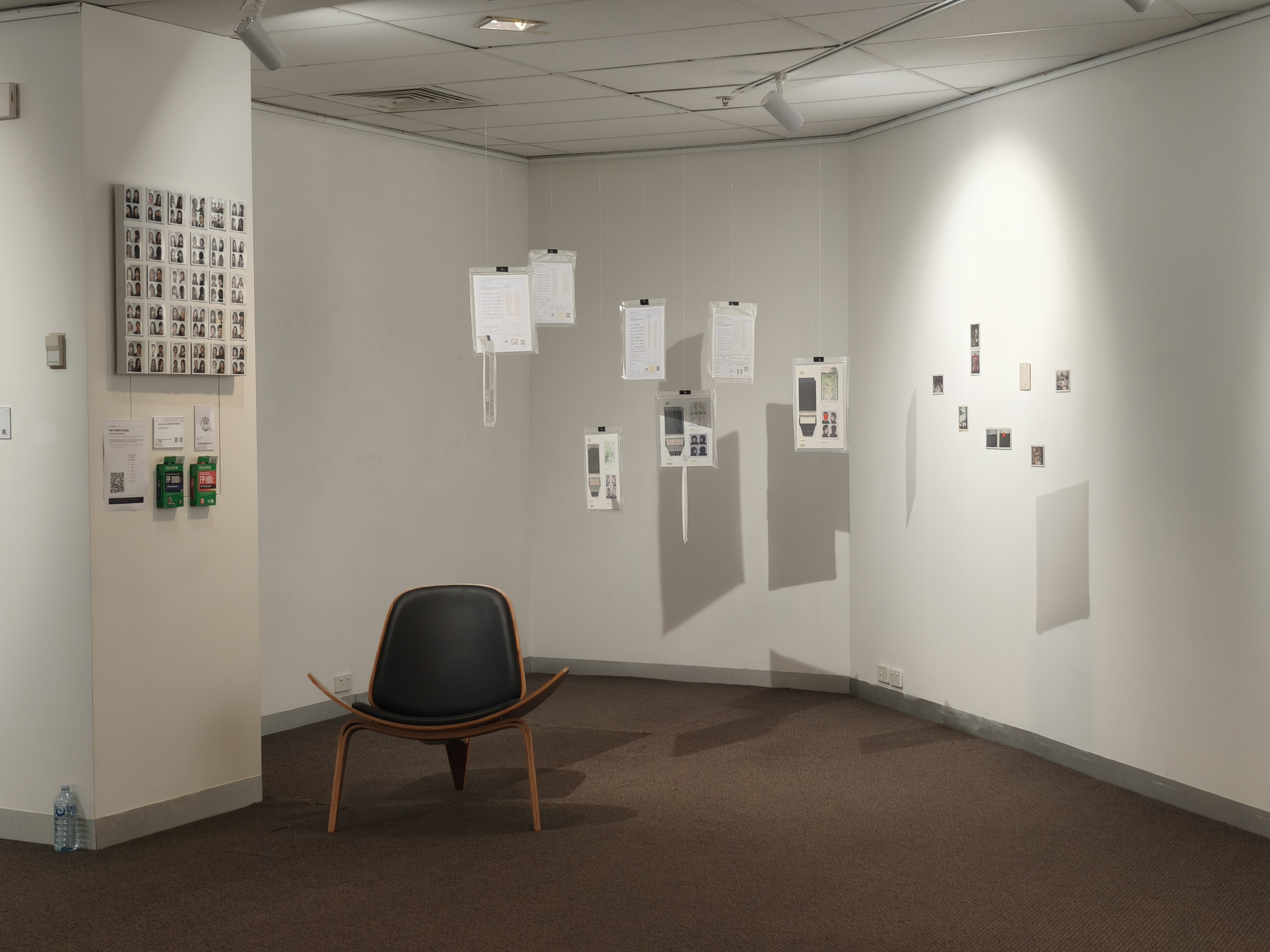
When incompleteness acquires authority
Once records enter systems, new operations become possible.
They can be classified, compared, searched, ranked, measured and assigned value. They can be used as evidence, used to predict, and used to decide.
A photograph by itself may simply describe. A database can compare thousands of descriptions. A form can turn complex experience into selectable categories. A score can transform behaviour into a number. A profile can affect what becomes visible, credible, valuable or suspicious.
The central question is therefore no longer simply whether a record is accurate.
It becomes: what authority should a partial record be allowed to possess?
A record does not need to be completely false in order to become consequential. The more difficult problem may be the opposite: a record can contain something true and still become unjust when a fragment begins to stand in for the whole.
This is the distinction that increasingly matters to me:
The problem begins not when a record is incomplete, but when incompleteness acquires authority.

Recording as infrastructure
This is why I increasingly think about recording not only as representation, but as infrastructure.
Recording itself is not power.
But recording can make knowledge durable, classifiable, searchable, comparable and actionable. Once records enter institutions, markets, platforms or computational systems, they can become part of the infrastructure through which authority is exercised.
This is where my practice enters an existing intellectual tradition rather than simply illustrating it. Michel Foucault’s writing on examination and documentation describes how records can place individuals within fields of knowledge and control.[2] Geoffrey Bowker and Susan Leigh Star show how classification systems and standards become part of information infrastructure, often disappearing into the background precisely because they have become ordinary.[3] James C. Scott’s account of institutional “legibility” examines the simplifications through which complex realities become administratively readable.[4]
I do not take these theories as a script for the artwork. I arrived at the problem through practice: photographing people, asking them to write, allowing machines to interpret them, and watching different descriptions accumulate around the same person. The theoretical connection became clearer afterwards.
A record that once described a person can begin to compare them.
Comparison can become evaluation.
Evaluation can become decision.
And a decision can change the conditions under which that person lives.
The record begins to act back upon the person it describes. Ian Hacking’s work on classifications of people is especially useful here: categories do not always remain external descriptions; the people classified may respond to them, and the classifications themselves may change in return.[5]
This movement—from encounter to inscription, from inscription to system, and from system to authority—is increasingly central to THE HUMAN RECORD.
AI as accelerated interpretation
This is also why artificial intelligence occupies an important but deliberately limited position within the work.
I do not think THE HUMAN RECORD is fundamentally a project about AI.
AI makes a much older structure unusually visible.
A system receives incomplete information and produces a coherent interpretation.
Human beings do this.
Photography does this.
Biography does this.
Institutions and archives do this.
AI does it with unusual speed, scale and an appearance of confidence.
The important question is therefore not whether AI can finally discover the “real” person hidden behind the record. I do not believe there is a technical solution that eliminates the distance between one consciousness and another.
The question is what happens when an interpretation produced from incomplete information becomes sufficiently stable, repeatable and authoritative that other decisions begin to depend upon it.
This is why the project has moved, for me, from a question of representation toward a question of agency.
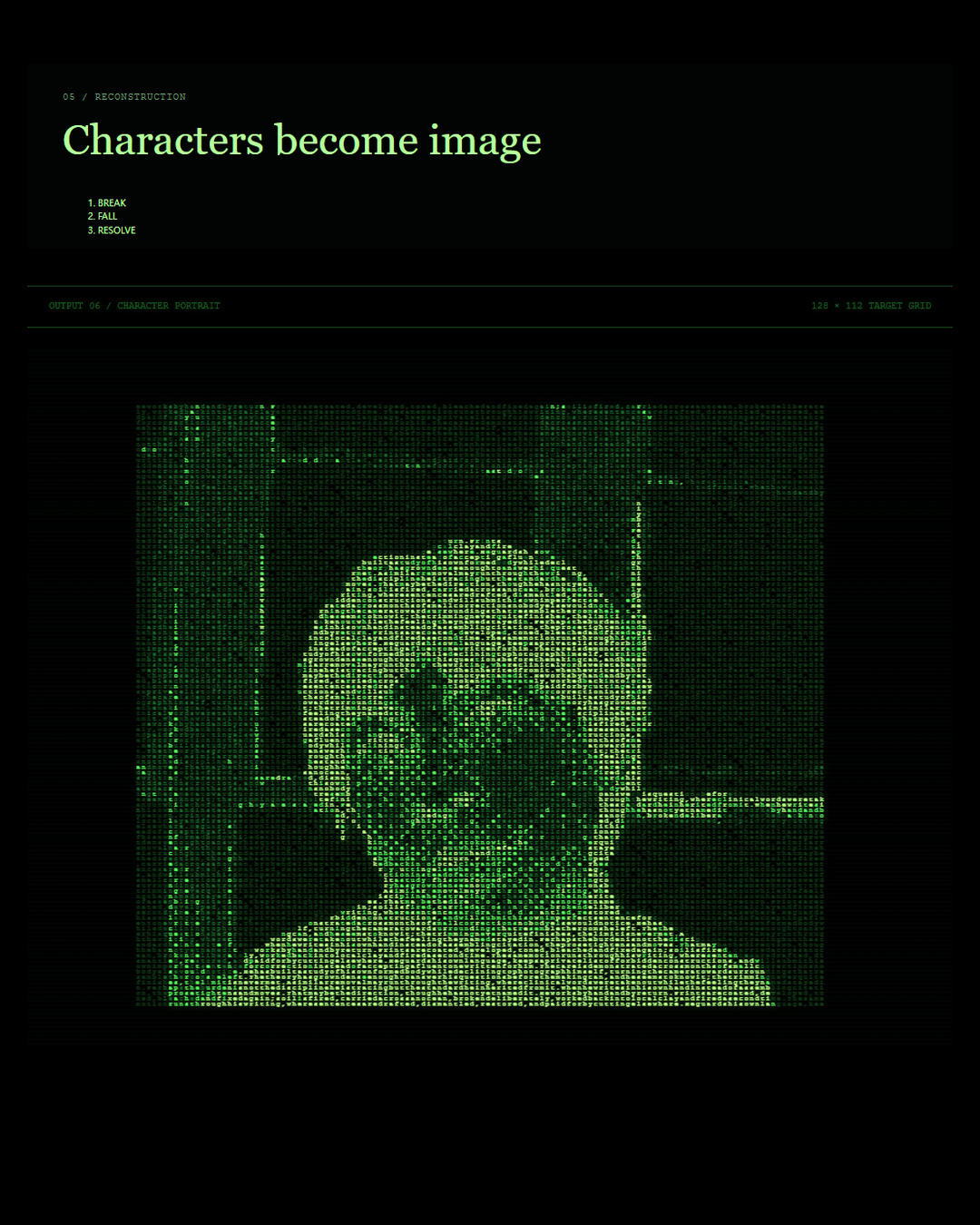
Babel, judgment and inscription
The Tower of Babel enters the project at this point.
I am not interested in Babel only as a story about different languages. For me, it names a broader condition: we translate because we cannot know one another directly.
Translation is necessary precisely because direct access is impossible.
But translation is never identical to what it translates.
The same is true of a photograph.
The same is true of an archive.
The same is true of an algorithmic profile.
Other references have entered the work gradually. I read the story of knowledge and judgment in Genesis as a metaphor rather than a theological proposition: the capacity to judge does not make human beings all-knowing. Wittgenstein gives me another way to approach the problem, because his work repeatedly returns to the limits of what language can meaningfully express.[6]
My family roots are in Anyang, Henan. That makes the history of inscription there personally resonant, but the distinction between history and legend matters. The oracle-bone inscriptions excavated at the Yin Ruins in Anyang are material evidence of early Chinese writing and record-making.[7] The story of Cangjie, by contrast, is a cultural legend about the invention of writing, not an archaeological account.
I keep these sources separate because they perform different functions in the work.
What connects them for me is a recurring question:
What happens when human beings acquire the ability to name, judge, inscribe and preserve the world without ever acquiring complete knowledge of it?
Writing expands human knowledge, but inscription also changes the condition of knowledge.
Once an experience becomes a sign, it can leave the person who produced it.
It can travel.
It can survive.
It can be copied.
It can be reorganised.
And eventually it can be used by people and systems that were never present at the original encounter.
The right to answer
This is why Human Response became necessary within THE HUMAN RECORD.
If a person can be photographed, described, classified and reconstructed, then the person must also retain the ability to answer what has been produced about them.
The response does not need to “correct” the archive.
The participant may agree.
They may disagree.
They may reject, revise, or leave a contradiction unresolved.
What matters is that interpretation does not become a one-way operation.
The archive must contain not only a record of the person, but also the possibility of the person speaking back to the record.
For me, disagreement is not a failure of the archive.
It may be one of the most important things the archive can preserve.
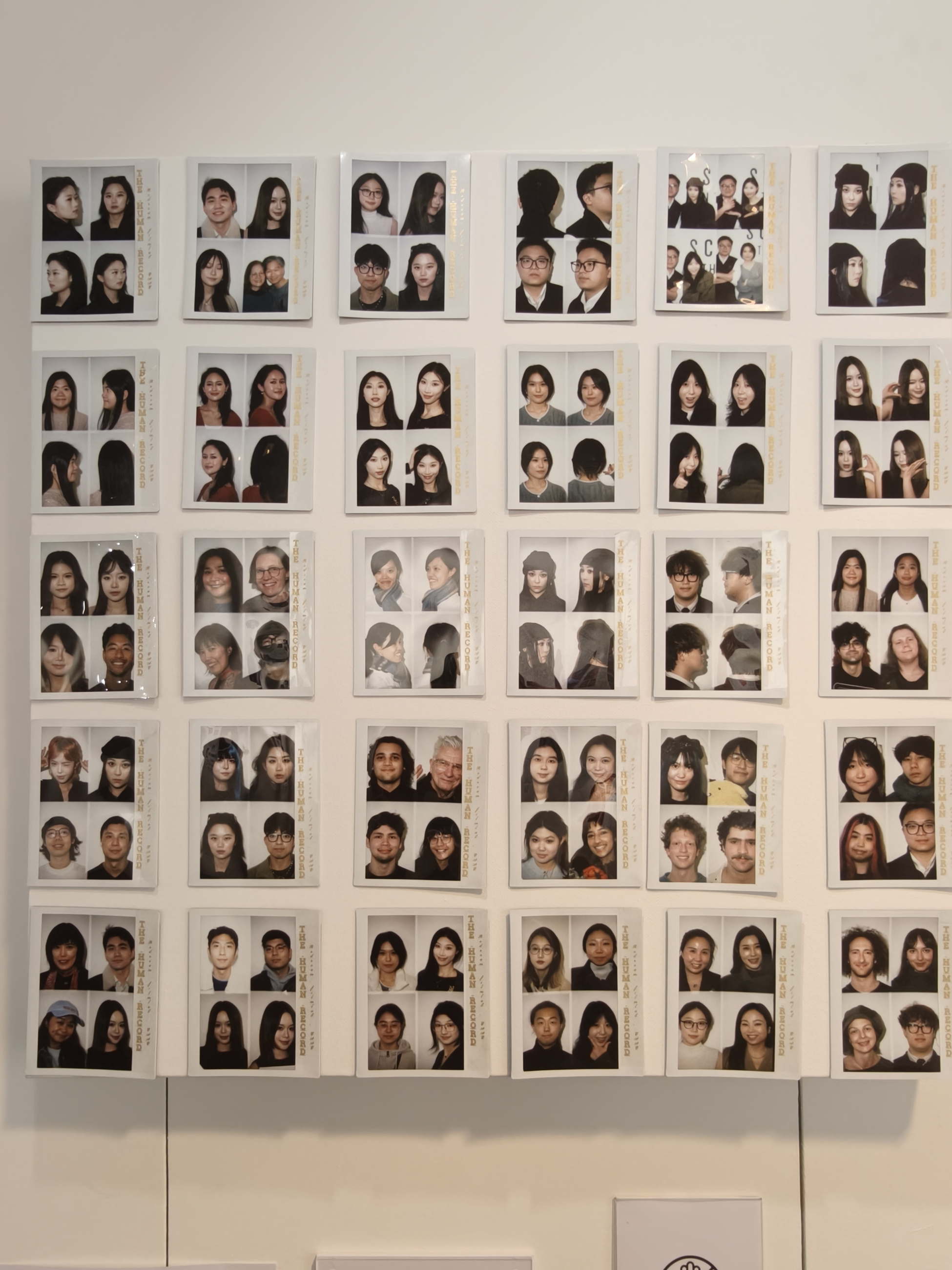
No final authority
So THE HUMAN RECORD is no longer primarily asking:
How accurately can we record a human being?
It is asking:
How do inevitably partial records become systems of knowledge, and how do those systems begin to exercise authority over the people they describe?
And then:
What forms of human agency can remain inside those systems?
I do not think the answer is to stop recording.
Human beings cannot live without records. We need language, archives, memory, measurement and institutions. They allow knowledge to persist beyond individual experience.
The question is how to live among these systems without allowing the systems we create to become the final authority over the people they were created to describe.
This is where the proposition at the centre of the project comes from:
A HUMAN MAY ENTER THE RECORD,
BUT NO RECORD HAS FINAL AUTHORITY OVER THE HUMAN.